
Who is Online

We have 385 guests and no members online

Human desire


For many people the idea that they can carry on after they die is a profound hope.  Amongst these are people: who have become famous and enjoy the adulation of their fellows; have achieved power and would like to continue to exercise it; have not achieved power, wealth or fame and would like this reversed;  feel they have suffered at the hands of others and want an opportunity to correct this injustice; like to think that their enemies will burn in hell; like to believe that a dead person will be able to appreciate their efforts to perpetuate his or her memory; want to meet up with a dead relative or friend when they die; would like an opportunity to observe what will happen in future, perhaps to a child or grandchild; or simply want to be loved unconditionally. 
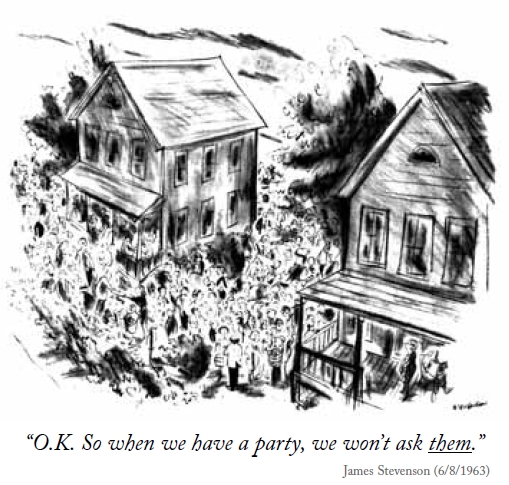
 

 revenge social


So, it is fantasised Hitler is in eternal torment or that Gandhi, like other famously 'good' people, is in heaven (were he not a Hindu) - more accessible to the average dead person than he was in life; you can just wonder up and have a chat.

Some, who believe to one degree or another, are scared: of not being good enough; or that their investment in a better life to come may be in vain. 

Living in fear is a form of enslavement. Those who live in fear are not free.

Others would not like their schadenfreude, in respect of those they dislike, to be misplaced - that they might not: 'rot in hell'.

Running through this fantasy is a cultural expectation that the Universe is, in some hidden way, just - that Devine retribution and Grace will put its blatant injustices and unconscionable sufferings to right in the end.

As Bob Dylan (Biblical scholar) says:


For the loser now;
Will be later to win;...
The line it is drawn;
The curse it is cast;
The slow one now;
Will later be fast;
As the present now;
Will later be past;
The order is Rapidly fadin'.
And the first one now;
will later be last;
for the times they are a-changin'.


Thus, those ‘who chose their parents badly’ or suffer 'the slings and arrows of outrageous fortune' will somehow, sometime, be redeemed or compensated by a just universe; that there is a heavenly ‘Hays Code’ that monitors the script and ensures that evil is punished; good prevails and the balance is redressed. 

But hope or desire are not the same as fact.  The main impact of these profoundly held desires is to reinforce religious beliefs; to perpetuate fruitless activity aimed at protecting one’s immortal soul; and ultimately to enslave their adherents. 


No comments

Travel

Cuba


What can I say about Cuba? 

In the late ‘70s I lived on the boundary of Paddington in Sydney and walked to and from work in the city.  Between my home and work there was an area of terrace housing in Darlinghurst that had been resumed by the State for the construction of a road tunnel and traffic interchanges.  Squatters had moved into some of the ‘DMR affected’ houses.  Most of these were young people, students, rock bands and radically unemployed alternative culture advocates; hippies. 

Those houses in this socially vibrant area that were not condemned by the road building were rented to people who were happy with these neighbours: artists; writers; musicians; even some younger professionals; and a number were brothels.  

Read more: Cuba

Fiction, Recollections & News

Are we the same person we once were?


I was initially motivated to write this cautionary note by the controversy surrounding the United States Senate hearing into the appointment of Judge Brett Kavanaugh to the US Supreme Court that was briefly called into question by Dr Christine Blasey Ford's testimony that Kavanaugh sexually assaulted her when they were both in their teens.

Kavanaugh is but one of many men who have come to the attention of the '#MeToo' movement, some of whom are now cooling their heels in jail.

Like the Kavanaugh example, a number of these cases, as reported in the media, seem to rely on someone's memory of events long past.  Yet as I will argue below after a decade or so our memories are anything but reliable.  After that time we should be respecting the accused's legal right to be presumed innocent, unless there is contemporary immutable evidence (diaries photographs and so on) or a number of non-colluding witnesses or others who have suffered a similar assault. 

Now in the news another high profile person has been convicted of historical sexual assault.  Cardinal George Pell has appealed his conviction on several charges relating to historical paedophilia.

There is just one accuser, the alleged victim.  A second alleged victim took his own life some time ago. The case was heard twice and in total 22 of the 24 jurors decided in favour of the alleged victim, despite the best defence money could buy.  Yet, as with the '#MeToo' movement in respect of powerful men, there is currently worldwide revulsion (see my Ireland Travel Notes) at sexual crimes committed within the Roman Catholic Church, such that a Cardinal is likely to be disbelieved, just as at one time a choir boy's accusations against a bishop or a priest would have been, and were, dismissed.

Both trials were held in closed court and the proceedings are secret so we have no knowledge of any supporting evidence. We do know that the two alleged victims were members of the Cathedral Choir and at least one other ex-choir boy also gave evidence. So justice may have been served. 

Yet I'm just a little concerned about the historical nature of the charges.  How reliable is anyone's memory? 

Read more: Are we the same person we once were?

Opinions and Philosophy

The demise of books and newspapers


Most commentators expect that traditional print media will be replaced in the very near future by electronic devices similar to the Kindle, pads and phones.  Some believe, as a consequence, that the very utility of traditional books and media will change irrevocably as our ability to appreciate them changes.  At least one of them is profoundly unsettled by this prospect; that he argues is already under way. 

Read more: The demise of books and newspapers

Terms of Use

Terms of Use                                                                    Copyright