
Who is Online

We have 110 guests and no members online

The Cars

The cars have become a Cuban icon.  Unlike the buildings they are owned and cared for.  Virtually none blow smoke and many have obvious new features; like disk brakes and mag-wheels. 
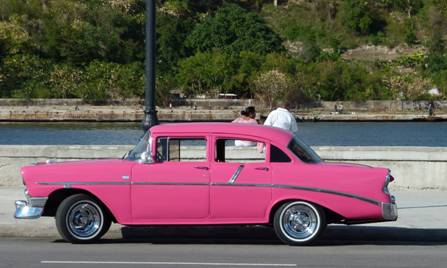
 

image038


The upholstery has generally been replaced at least once and I suspect that many of the engines may also have been updated. Some have bodywork that is the worse for wear while others have immaculate paintwork; but none that I saw was in ‘original condition’.  The owners are often Afro-Cuban and run a private enterprise cab service in competition with the government cabs. 
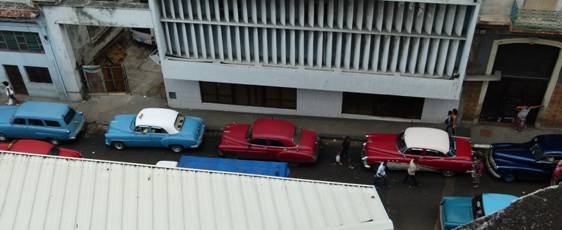
 

image039


The Government cabs are run a bit like a bus service with government drivers.  They are mainly Škodas but are not either new or in good condition.  I got the impression that the last purchase probably dated from the collapse of communism in the Czech Republic. There is a scale of fares based on distance and no meters.  $3 to $5 is typical around Havana; $20 out to the airport.  Tipping is not required.

There is also a system of Tourist buses.  These are very good air-conditioned Chinese built coaches but as is generally the case in Cuba not everything is working on them. 
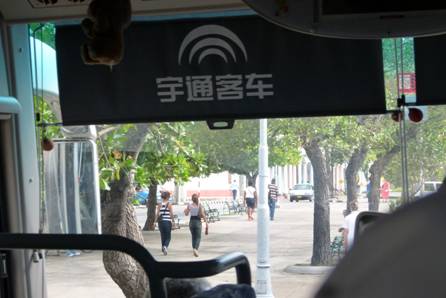
 

image040


Again the staff are State employees; although they seem to be running a number of small commercial businesses ‘on the side’. These include roadside trading in meat and other rural products, presumably for restaurants or shops in town, as well as the transportation of ‘off the book’ passengers.

We made one long bus journey across and down the island to Trinidad where we stayed the night in a traditional house that has been converted to provide several large bedrooms; with en-suite bathrooms. The landlady-proprietor was enthusiastic but disappointed that we were not staying longer and wanted to eat out.  She turned the electricity in the rooms off during the day.  Ours contained a fridge used as a table that remained unplugged throughout our stay.
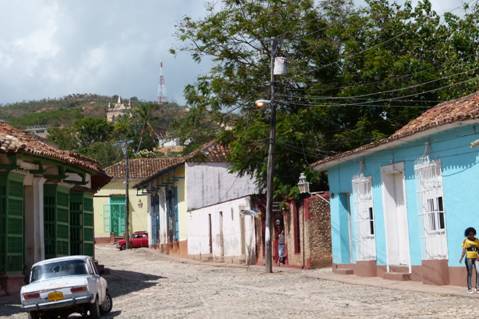
 

image041
Tinidad


It was very hot and when we finally turned on the ancient air-conditioner to cool the room down at night it didn’t work. There was exposed electrical wiring in the bathroom including an outlet in the shower!  But in Cuba ‘do it yourself’ is a way of life.  On the plus side we saw some for the countryside; passed through several other towns and had the best restaurant meal in Cuba at a charming converted house in Trinidad.


No comments

Travel

The United Kingdom


In May and Early June 2013 we again spent some time in the UK on our way to Russia. First stop London. On the surface London seems quite like Australia. Walking about the streets; buying meals; travelling on public transport; staying in hotels; watching TV; going to a play; visiting friends; shopping; going to the movies in London seems mundane compared to travel to most other countries.  Signs are in English; most people speak a version of our language, depending on their region of origin. Electricity is the same and we drive on the same side or the street.  Bott Wendy and I have lived in London in previous lives, so it's like another home.

But look as you might, nowhere in Australia is really like London.

Read more: The United Kingdom

Fiction, Recollections & News

Peter Storey McKie


My brother, Peter, is dead. 

One of his body's cells turned rogue and multiplied, bypassing his body's defences. The tumour grew and began to spread to other organs.  Radiation stabilised the tumour's growth but by then he was too weak for chemo-therapy, which might have stemmed the spreading cells.

He was 'made comfortable' thanks to a poppy grown in Tasmania, and thus his unique intelligence faded away when his brain ceased to function on Sunday, 22nd May 2022.

I visited him in the hospital before he died.  Over the past decade we had seldom spoken. Yet he now told me that he often visited my website. I had suspected this because from time to time he would send e-mail messages, critical of things I had said. That was about the only way we kept in touch since the death of his daughter Kate (Catherine). That poppy again.  

Read more: Peter Storey McKie

Opinions and Philosophy

Carbon Capture and Storage


(Carbon Sequestration)


The following abbreviated paper is extracted from a longer, wider-ranging, paper with reference to energy policy in New South Wales and Australia, that was written in 2008. 
This extract relates solely to CCS.
The original paper that is critical of some 2008 policy initiatives intended to mitigate carbon dioxide emissions can still be read in full on this website:
Read here...


Carbon Sequestration Source: Wikimedia Commons


This illustration shows the two principal categories of Carbon Capture and Storage (Carbon Sequestration) - methods of disposing of carbon dioxide (CO2) so that it doesn't enter the atmosphere.  Sequestering it underground is known as Geosequestration while artificially accelerating natural biological absorption is Biosequestration.

There is a third alternative of deep ocean sequestration but this is highly problematic as one of the adverse impacts of rising CO2 is ocean acidification - already impacting fisheries. 

This paper examines both Geosequestration and Biosequestration and concludes that while Biosequestration has longer term potential Geosequestration on sufficient scale to make a difference is impractical.

Read more: Carbon Capture and Storage

Terms of Use

Terms of Use                                                                    Copyright