

Life
(Life is) the condition that distinguishes animals and plants from inorganic and dead organisms [17].
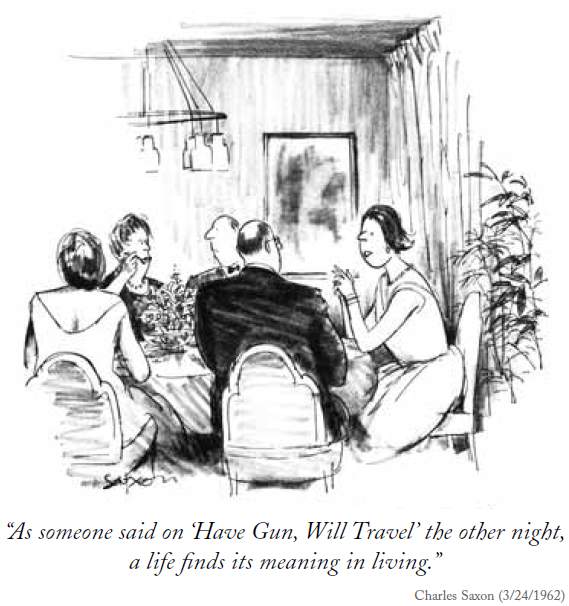
As this example shows, our culture has surprising difficulty in defining the word 'life'.
The Columbia Encyclopaedia confirms that there is no universal agreement on a definition of life but says that life can be recognised by its manifestations:
- organisation;
- metabolism (the ability to organise non-living material for its growth and to provide energy);
- growth (of its parts);
- irritability (response to stimuli);
- adaptation (accommodation of a living organism to its environment); and
- reproduction (replication to create more of the same).
Organisation is clearly important.
If I took all the atoms needed to make a person and put them into a cylinder (an urn or a coffin?) they would not come to life let alone have feelings, beliefs, knowledge, memories or the power to communicate. A recently dead person is still dead.
Some attempts have been made to define life as an organising principle alone eg:
The power that unites a given all into a whole that is presupposed by all its parts.[18]
Complex organisation (design) is the most fundamental principle of any organism and is often evidence of the presence or action of life.
All machines and organisms are organised but not all are alive. If I took a hammer to this computer (that I am writing on) it would not work anymore. All the parts would still be there but the many immediate and ephemeral processes it undertakes to convert magnetic marks on a disk into this text on the screen would cease due to lost organisation. Its ability to process electronic signals would cease. In this case its 'thoughts' are implicit in metadata, physically represented by switches; representing strings of 32 1s and 0s; held in one of four central processors; each changing state 2.4 billion times a second. Its working memory consists of 64 billion switches.
Maybe life can be defined in terms of the kind of messages living things carry and process.
As Milton said of books:
Books are not absolutely dead things but do contain the potency of life in them to be as active as that soul was whose progeny they are; nay they do preserve as in a vial the purest efficacy and extraction of that living intellect that bred them[19].
Milton seems to be talking about the message carried by a book.
This computer has both a complex design and can carry many more messages, in many more sophisticated ways, than a book.
Like this computer lots of machines also have the ability to react to stimuli. Take, for example, a set of traffic lights. Traffic lights spend their day reacting to stimuli. They have loops in the road that sense the cars passing over them and buttons for pedestrians to push. They have different programs for different times of day and different days of the week. They can be in touch with other lights in the vicinity and they can react to traffic density in different streets at their intersection and at others around them.
Yet I do not want to say that this computer, traffic lights (or a book for that matter) is actually alive. But like a fossil or a frying pan, their design and the messages they carry are clear evidence that something was alive. If you went to a desolate place and found any of these things you would conclude that someone had probably been there before you. Life is not just an organisation but an organiser.
If my computer reproduced itself one day I would be a lot less confidant that it was not alive. If, in addition, future replications were better suited to the environment through survival of the fittest I would be convinced that they were alive.
Computers do do this of course; but at the moment they are not themselves alive because they need humans to do the replication (design and metabolising). In this respect they are like houses or clothes or any other symbiotic technology (idea) that has become a part of the human condition.
Life must be defined in terms of a particular kind of organisation with certain necessary attributes.
A combined definition:
Life is the organising principle in any replicating structure that contains mechanisms to:
- collect and process materials and energy for growth and replication;
- change its characteristics in response to stimuli and its environment; and
- actively manage these processes.
Because even the simplest life forms are highly complex, and because their design or organising principle is in effect a message, all life forms require sophisticated message storage and processing capabilities.
One thing is now certain; life has been on Earth for most of its existence and has survived a number of cataclysms so far. We expect that it will continue long after humans disappear. If phenomenon 'life' has a 'meaning', this meaning preceded humanity and will succeed it.
One of the problems scientists and philosophers would like to solve is how life arose in the first place. We know as a general rule that in our universe energy attempts to even itself out: hot things get colder; organised things get jumbled; the universe is expanding and getting colder. This is called entropy: the tendency to disorder.
Life uses energy differences to create order, to assemble patterns and to store energy by creating substances that are at a higher energy state than they would be without life. These include fossil fuels and many chemicals processed within cells. We do the same with information and in our physical constructions.
Some theorists have pointed out that when life does this it actually increases total apparent entropy because this activity itself consumes energy and accelerates the consumption of energy differences. They see life as a means by which the universe can more quickly reach a fully expended state when all energy is levelled out.
If this is so life is an outcome of entropy, like water running down hill. We can expect to find life everywhere in the universe where conditions allow its existence.
Simple life forms do this well by being very numerous. Complex life forms do it better by adding organisational complexity. It follows that complex human activities that accelerate entropy are simply a response the laws of this universe.
If this theory is correct, we can expect to find other active organising systems that are like life in that they accelerate entropy.