Who is Online

We have 417 guests and no members online

Arles

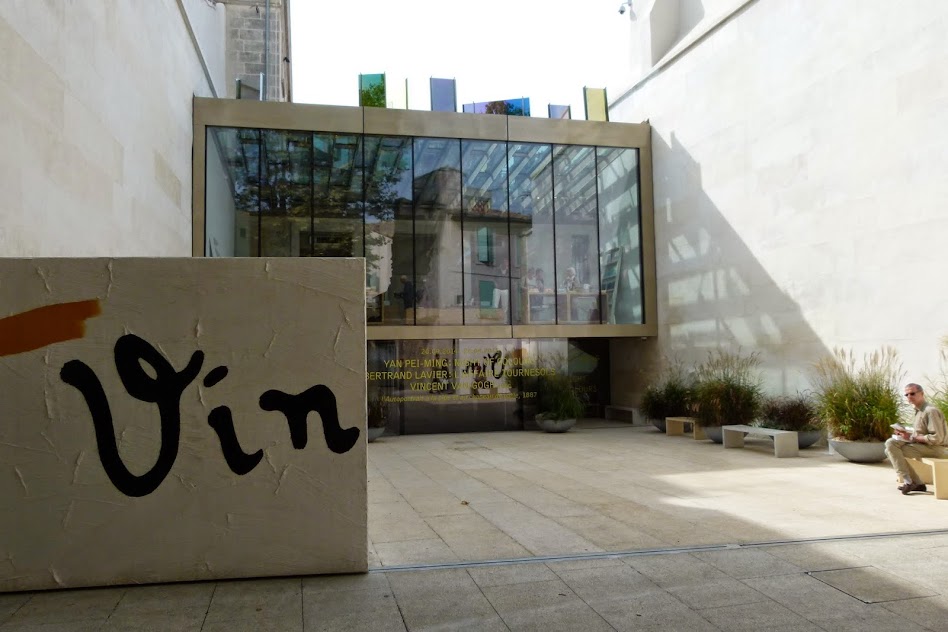
On our way to Aix-en-Provence, the town of Cezanne we stopped for several hours in Arles the town of Van Gough.

But of course when Vincent was there he was an unknown madman, his genius completely unrecognised.  So they lack any significant works of his.

But they are now very happy to cash-in on his legend having shunned him in life.
 

Vincent Vincent2

Vincent


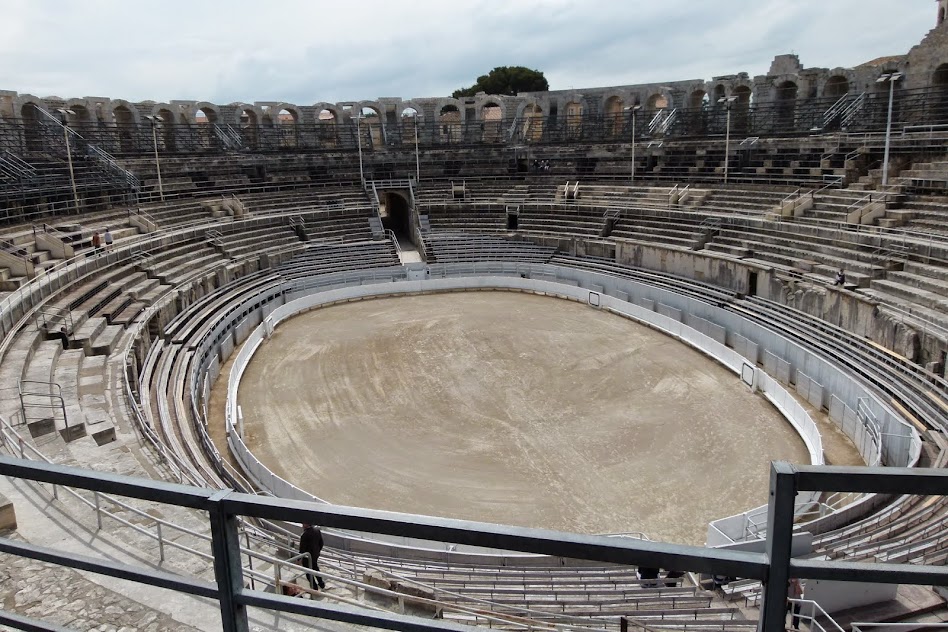
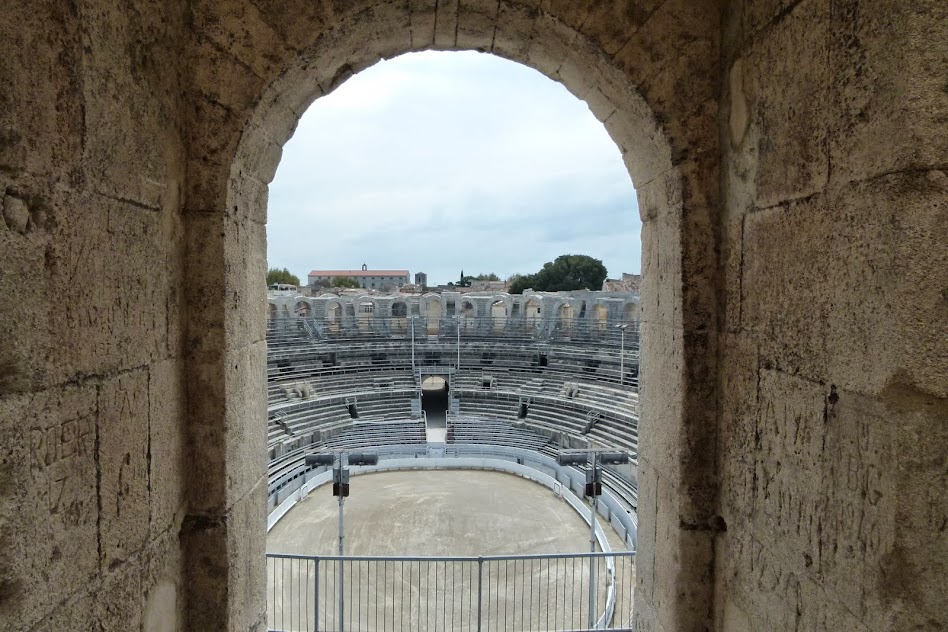
The town has quite a lot going for it, despite their inability to see a good thing in Vincent’s work when they saw it. There is a spectacular Roman amphitheatre similar to the Colosseum in Rome.

Arènes d'Arles Arènes d'Arles2
Arènes d'Arles3 Arènes d'Arles4

Arènes d'Arles


This is used for bullfights but they no longer kill the bulls, who apparently love the applause and put on a good show (I made that bit up – it’s bull).

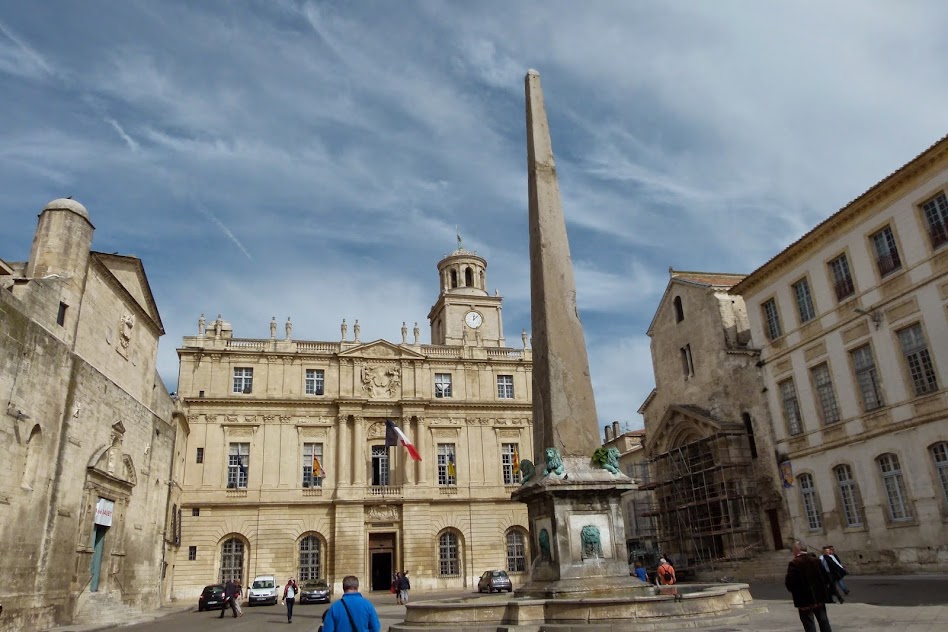
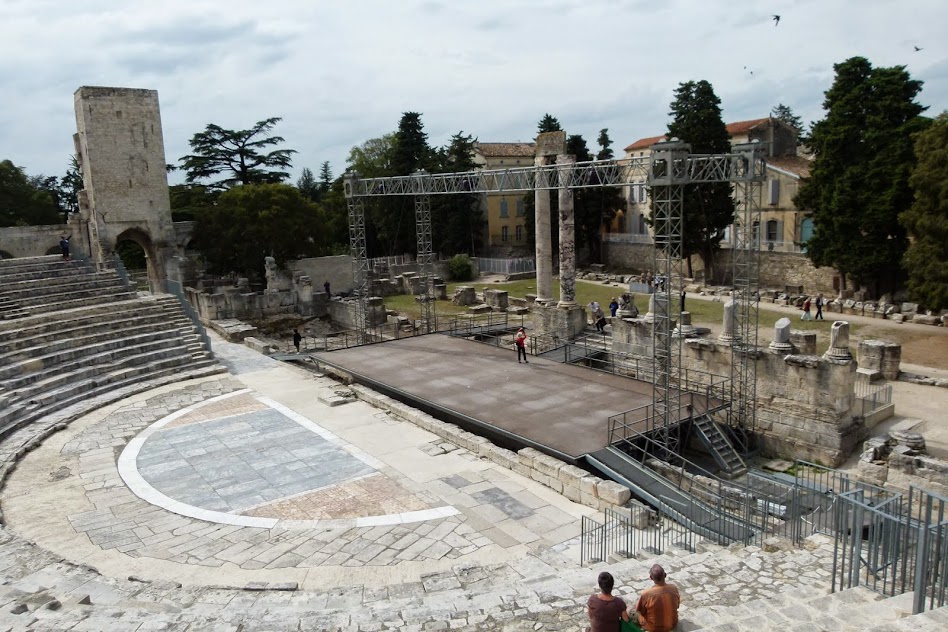
In addition there is a smaller Roman Theatre that has unfortunately shrunk since it was built due to its being a readymade source of pre-cut building materials.

A plaque on the site says Julius Caesar built it but that seems unlikely - I doubt he was into hefting large stones and even in its diminished state there are just too many big ones for one man to heft alone.  I imagine it means that it was originally built by those reporting to Julius Caesar when he was briefly resident here.  
 

Around Arles Around Arles2
Around Arles3 Around Arles4

Around Arles


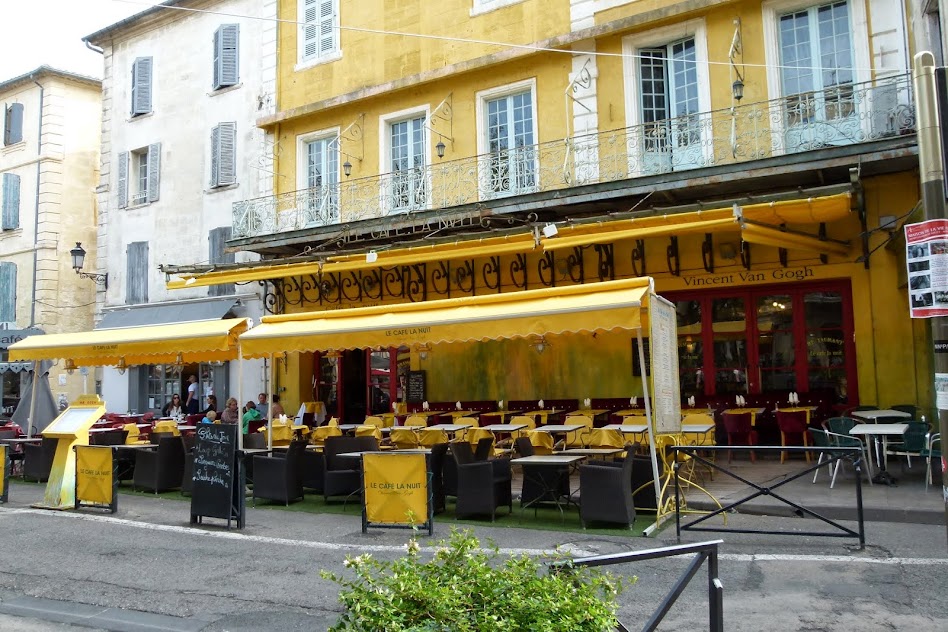
We found Arles to be a pleasant distraction and had quite a good lunch in the cafe you can see in the picture above. But it was Italian, not French, maybe in deference to Julius Caesar?


No comments

Travel

Sri Lanka


In February 2023 we joined an organised tour to Sri Lanka. 


Beginning in the capital Colombo, on the west coast, our bus travelled anticlockwise, in a loop, initially along the coast; then up into the highlands; then north, as far as Sigiriya; before returning southwest to Colombo.

Read more: Sri Lanka

Fiction, Recollections & News

The Coronation

Last Time


When George VI died unexpectedly in February 1952, I was just 6 years old, so the impact of his death on me, despite my parents' laments for a good wartime leader and their sitting up to listen to his funeral on the radio, was not great.

At Thornleigh Primary School school assemblies I was aware that there was a change because the National Anthem changed and we now sang God Save The Queen.

Usually, we would just sing the first verse, accompanied by older children playing recorders, but on special occasions we would sing the third verse too. Yet for some mysterious reason, never the second.

The Coronation was a big deal in Australia, as well as in Britain and the other Dominions (Canada, South Africa and New Zealand) and there was a lot of 'bling': china; tea towels; spoons; and so on. The media went mad.

Read more: The Coronation

Opinions and Philosophy

Bertrand Russell


Bertrand Russell (Bertrand Arthur William Russell, 3rd Earl Russell, OM, FRS (18 May 1872 – 2 February 1970)) has been a major influence on my life.  I asked for and was given a copy of his collected Basic Writings of Bertrand Russell for my 21st birthday and although I never agreed entirely with every one of his opinions I have always respected them.

In 1950 Russell won the Nobel Prize in literature but remained a controversial figure.  He was responsible for the Russell–Einstein Manifesto in 1955. The signatories included Albert Einstein, just before his death, and ten other eminent intellectuals and scientists. They warned of the dangers of nuclear weapons and called on governments to find alternative ways of resolving conflict.   Russell went on to become the first president of the campaign for nuclear disarmament (CND) and subsequently organised opposition to the Vietnam War. He could be seen in 50's news-reels at the head of CND demonstrations with his long divorced second wife Dora, for which he was jailed again at the age of 89.  

In 1958 Gerald Holtom, created a logo for the movement by stylising, superimposing and circling the semaphore letters ND.

Some four years earlier I'd gained my semaphore badge in the Cubs, so like many children of my vintage, I already knew that:  = N(uclear)   = D(isarmament)

The logo soon became ubiquitous, graphitied onto walls and pavements, and widely used as a peace symbol in the 60s and 70s, particularly in hippie communes and crudely painted on VW camper-vans.


 (otherwise known as the phallic Mercedes).


Read more: Bertrand Russell

Terms of Use

Terms of Use                                                                    Copyright